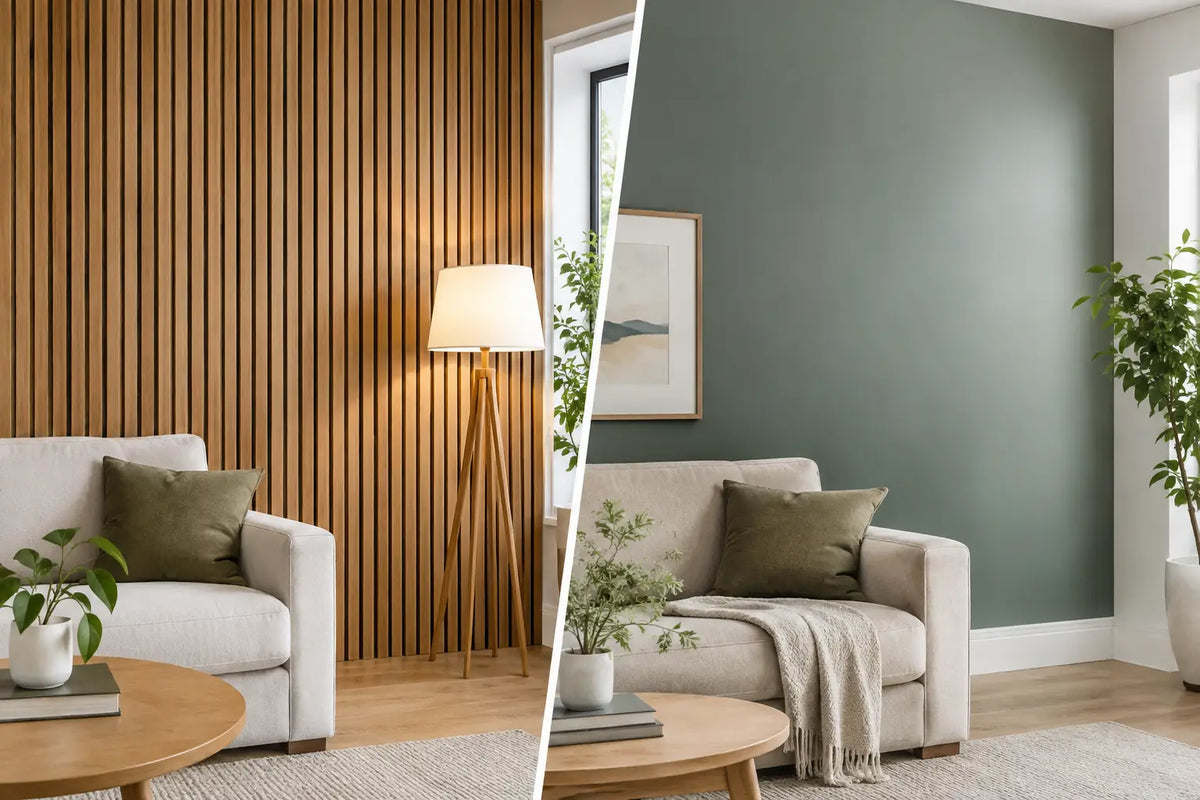
A freshly painted wall can transform a room in a weekend. But when the light hits a warm oak-effect feature wall, the difference is about more than colour. In the choice of slat panels versus painted walls, paint offers flexibility and a low initial outlay, while slatted panels bring texture, depth and a more considered finish without turning your home into a building site.
The right option depends on the room, the condition of the wall and the result you want to live with. If you are refreshing a whole house before moving in, paint may make perfect sense. If one blank wall needs to become the focal point of a lounge, bedroom or media wall, slat panels can deliver far more impact per square metre.
Slat Panels Versus Painted Walls: The Key Difference
Paint changes the colour of a wall. Slat panels change its character. Their vertical lines add rhythm and visual height, while wood-look finishes introduce warmth that flat paint cannot easily replicate. This is why they work so well behind televisions, beds, dining tables and hallway consoles.
Painted walls have their own strengths. They suit every room size, work with any decorating style and make it easy to change direction later. A pale neutral can make a compact room feel brighter; a deep navy or forest green can create drama at a modest cost. For broad, uninterrupted wall areas, paint remains a practical foundation.
Slatted wall panels are more intentional. Rather than covering every wall, they are usually used to frame an area or create a feature. A single panelled section behind a sofa can make a standard living room feel more finished. In a bedroom, panels placed behind the bed can replace the need for an oversized headboard. The effect is premium, but the project can still be manageable for a confident DIYer.
Appearance: Flat Colour or Added Texture?
The biggest decision is visual. Paint is clean and adaptable, but it is also flat. Even beautiful shades rely on lighting, furniture and artwork to bring the wall to life. That is not a drawback if your room already has plenty of texture through rugs, curtains and soft furnishings. It can be exactly what a calm, minimal scheme needs.
Slat panels create shadow lines that shift through the day. This gives a wall depth, even in neutral tones, and helps larger rooms feel warmer. Dark walnut-style finishes can create a confident, moody backdrop, while lighter oak looks suit Scandinavian-inspired spaces and softer contemporary interiors.
Vertical slats can also make ceilings appear higher, particularly in box rooms, narrow hallways and new-build spaces with simple proportions. They should not be used as a cure for every design problem, though. In a small, poorly lit room, covering every wall in a dark finish can feel enclosing. Keep the panels to one focal wall and balance them with lighter surrounding surfaces.
The media-wall advantage
A television mounted on a painted wall can look neat, but cables, brackets and soundbars often make the area feel unfinished. Slat panels give a media wall a purpose-built look without the cost and disruption of a full timber frame or bespoke joinery project.
Plan the layout before fitting. Mark the television position, decide where cables will run and check that sockets remain accessible. A panelled backdrop works best when the screen is centred and the panel section is proportioned to the furniture below it, rather than simply stretched from corner to corner.
Cost: Consider the First Spend and the Final Look
Paint is usually cheaper at the point of purchase. For a straightforward room with sound walls, the essentials are paint, filler, sandpaper, masking tape, a roller and brushes. It is an affordable way to update multiple walls quickly.
The real cost of painting rises when the wall needs preparation. Cracks, old wallpaper adhesive, uneven plaster, stains and poorly patched holes all take time to correct. Dark colours may need several coats, and a professional finish depends on careful cutting-in and consistent coverage. If you are paying a decorator, labour can soon outweigh the paint itself.
Slat panels cost more per wall than a tin of paint, but they can offer greater visual value where impact matters most. They also help disguise minor cosmetic imperfections, provided the wall is dry, sound and reasonably flat. You are investing in a finished feature rather than simply a new colour.
For a budget-conscious project, paint the rest of the room and reserve panels for the wall your eye lands on first. This approach creates contrast, controls spend and avoids overloading the space.
Installation and Disruption
Painting looks simple, but preparation makes or breaks it. Furniture needs moving or covering, edges need masking and each coat needs drying time. The room may smell of paint for a while, especially where ventilation is limited. It is a familiar DIY job, but it is not always a quick one.
Acoustic slat panels are designed to make feature-wall projects more approachable. Once the wall has been measured and marked out, panels can be cut to size and fixed using suitable adhesive and, where required, mechanical fixings. Installation trims help create clean edges and a more polished result around corners or exposed sides.
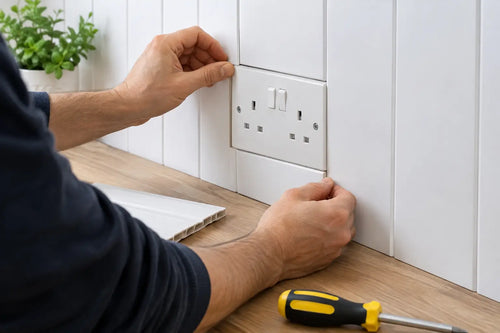
The key is to measure twice before ordering and fitting. Check panel dimensions, allow for skirting boards, sockets and switches, and decide whether the panels will sit above or behind furniture. A free installation guide is particularly useful if this is your first panel project, as a tidy starting line sets up the entire wall.
Neither option is right for a damp or unstable surface. Paint will peel if moisture is unresolved, while panels should not be fitted over a wall with active damp, loose plaster or significant movement. Deal with the underlying issue first, then choose your finish.
Maintenance and Everyday Living
Painted walls are easy to understand but not always easy to keep pristine. Scuffs appear around dining chairs, light switches, pushchairs and enthusiastic pets. Matt finishes can be particularly difficult to touch up without leaving a visible patch, especially after the paint has faded slightly over time.
Slat panels are low-fuss in day-to-day use. A light dusting or vacuum with a soft brush attachment will usually keep them looking smart. Their texture is forgiving too: small marks are often less obvious than they would be on a plain, pale painted wall. In busy family homes, that can be a real advantage.
That said, paint is simpler to recolour. When you fancy a different shade, you can repaint. Changing panels is a more deliberate project, so choose a finish you will enjoy beyond the latest trend. Natural wood-look tones, charcoal and muted neutrals tend to have lasting appeal because they work with changing furniture and accessories.
Sound, Warmth and Comfort
A painted wall does not alter how a room sounds. Slat panels with acoustic backing can help reduce echo and soften the sharpness often found in hard-floored lounges, home offices and media areas. The result is not full soundproofing, and it will not stop noise travelling through walls, floors or ceilings. But it can make a room feel less bare and more comfortable to spend time in.
This is especially worthwhile in open-plan homes, rooms with large windows or spaces with lots of hard surfaces. If better acoustics matter, use the panels as part of a wider approach with curtains, rugs and upholstered furniture.
The warmth is visual as well as acoustic. Wood-effect finishes counterbalance grey sofas, black televisions and contemporary metal lighting, helping a modern room feel inviting rather than clinical.
Which Option Suits Your Project?
Choose paint if you want to refresh a full room on a tight budget, need a specific colour match or expect to redecorate regularly. It is also the more straightforward choice for ceilings, awkward wall shapes and large areas where a simple backdrop is the goal.
Choose slat panels if you want a focal point, a more layered interior or a smarter media-wall backdrop with less mess than traditional cladding. They are ideal when a room feels finished but not memorable, or when one tired wall is letting down otherwise good furniture and flooring.
For renters, always check your tenancy agreement before fixing anything to the wall. Decorative upgrades may be permitted, but adhesive and fixings can affect the surface when removed. For landlords, panels can be a strong choice in a feature area, but select a versatile finish and retain spare panels for future repairs if needed.
Home Hub Direct makes it easier to take the panel route with ready-to-order finishes, DIY-friendly fitting guidance and support when you need a little reassurance before starting.
Your wall does not have to choose between practical and beautiful. Use paint to create the canvas, then use slat panels where your home deserves a little more presence.