A tired run of timber panels can make an otherwise smart garden feel unfinished. The best garden fencing alternatives give you more choice over privacy, colour, maintenance and cost - whether you want a clean contemporary boundary, a softer planted screen or a simple way to divide up an outdoor space.
Traditional fencing still has its place, especially for quick boundary repairs. But it can warp, fade and demand regular staining or treatment. For many UK homeowners, a more durable or design-led option makes better sense, particularly in exposed gardens where rain, wind and shade take their toll.
How to choose the best garden fencing alternatives
Start with the job your boundary needs to do. A screen between neighbouring patios needs proper height and minimal gaps. A divider around a seating area can be more decorative, while a front garden may need to remain open enough for light, visibility and access.
Also consider how much upkeep you are happy to take on. Natural materials and living screens can look beautiful, but they need seasonal attention. Composite and metal options are more predictable: clean them occasionally and they continue to look tidy. Finally, check ownership and local restrictions before building. Boundary responsibility, permitted heights and lease conditions can all affect what you install.
1. Composite fencing for a clean, low-maintenance finish
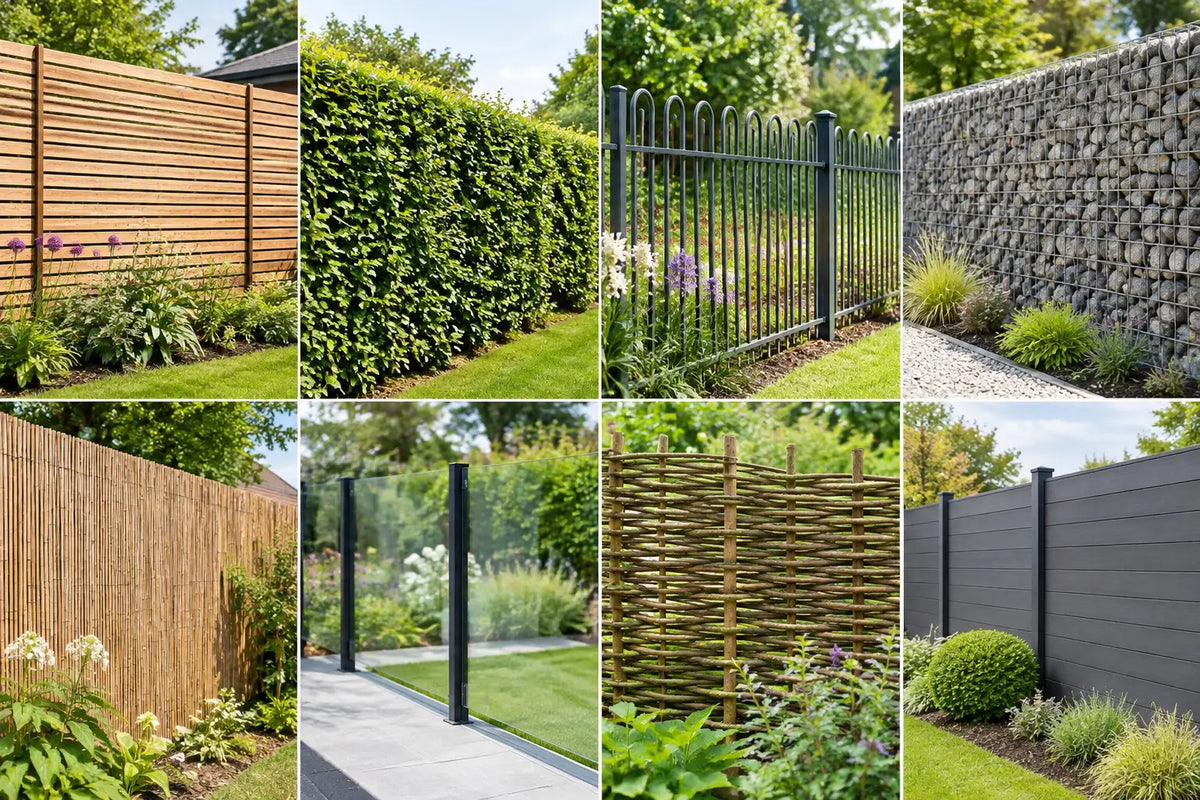
Composite fencing is one of the strongest alternatives to timber panels when you want privacy without the annual maintenance routine. Made from a blend of recycled wood fibres and polymer, it creates a smart, uniform look that works especially well with composite decking, outdoor wall panels and modern garden furniture.
It will not need painting, staining or sealing, and it is designed to resist the moisture-related splitting and rotting associated with untreated wood. A wash with warm soapy water is usually enough to remove everyday dirt. That makes it a practical choice for busy family gardens, rental properties and gardens being prepared for sale.
The main trade-off is the initial outlay. Composite can cost more than basic timber, but the longer-term saving in treatments, replacements and weekend maintenance can make it better value. Choose a colour that works with your brickwork or render. Warm wood tones soften contemporary schemes, while charcoal and grey create a sharper, architectural edge.
For a coordinated upgrade, Home Hub Direct’s composite fencing range is designed to help create a premium garden boundary with a straightforward, DIY-friendly fitting approach.
2. Decorative outdoor wall panels for feature screening
If you are screening a specific area rather than enclosing the full perimeter, outdoor wall panels can create a more intentional finish than a standard fence. Use them behind an outdoor dining set, around a hot tub area or along a patio wall that needs more presence.
This option is all about visual impact. A slatted or textured panel can introduce depth and structure, turning a blank edge of the garden into a feature. It is particularly useful in smaller gardens, where every visible surface has a bigger effect on the overall feel.
Panels need a sound frame or wall behind them, so they are not always a replacement for a boundary fence on their own. Think of them as an upgrade for privacy screens, side returns and entertaining zones. Measure carefully, allow for expansion where required and use trims for a neat finished edge.
3. Trellis with climbers for lighter privacy
Trellis is ideal when a solid fence would make the garden feel boxed in. Its open structure lets light and air through while giving climbing plants something to grow over. Positioned above a low wall or existing fence, it can add privacy without making the boundary appear heavy.
The result depends on the planting. Evergreen climbers offer more consistent cover, while flowering varieties bring seasonal colour and fragrance. Jasmine, clematis and honeysuckle can make a seating area feel more secluded, but deciduous plants will be less private during winter.
Trellis suits cottage-style and traditional gardens particularly well, though black or grey-painted trellis can look crisp in a contemporary layout. It does require ongoing pruning and, if made from timber, eventual treatment or replacement. Choose it for charm and softness rather than a completely maintenance-free solution.
4. Living hedges for a natural boundary
A hedge can provide privacy, reduce wind and create a calmer backdrop for planting. Unlike a fence, it changes through the year and can support wildlife, making it a rewarding choice for gardeners who want a boundary that feels part of the landscape.
Evergreen varieties are the best fit where year-round screening matters. Laurel gives dense coverage and grows quickly, while yew offers a more formal, refined look but is slower to establish. Mixed native hedging has a looser appearance and brings seasonal interest, although it may not provide instant privacy.
Be realistic about the space available. A hedge takes time to fill out and needs regular cutting to prevent it overwhelming a narrow garden. Roots, shade and the effect on neighbouring properties also deserve consideration. If you need immediate screening, pair young planting with a simple temporary panel or trellis while it establishes.
5. Gabion walls for texture and strength
Gabion walls are wire cages filled with stone, slate or other hard landscaping material. They create a substantial, contemporary boundary that feels more permanent than lightweight fencing. Their texture works brilliantly alongside paving, rendered walls and planting with architectural shapes such as grasses or evergreens.
They are especially useful on sloping sites, where they can work as retaining features as well as visual dividers. Once installed correctly, gabions require very little maintenance and stand up well to British weather.
Their weight is both the benefit and the challenge. They need a stable, level base, and moving stone into place is more labour-intensive than fitting panels. They can also feel imposing in a compact plot. Use them selectively - perhaps as a low boundary wall, raised planter or focal screen - rather than surrounding a small garden completely.
6. Metal screens for a contemporary statement
Laser-cut metal screens, aluminium slats and perforated panels offer privacy with a more tailored look. Patterns can cast attractive shadows across patios, while horizontal slats echo the clean lines of modern extensions and garden rooms.
Metal is a strong option for side passages, bin areas and patio zones where you want a slim profile. Powder-coated aluminium is generally low maintenance, while weathering steel develops a rust-coloured surface that can look striking against greenery. The latter is a deliberate aesthetic choice, not a neat black-and-grey finish.
Check the level of screening before buying. Decorative cut-outs look great but may leave more visibility than expected at close range. For overlooked spaces, choose denser patterns or combine screens with planting. Professional fitting may be worthwhile for heavy panels or installations that need secure posts and footings.
7. Planters and layered planting for flexible zoning
Not every garden needs a fixed boundary. Large planters, ornamental grasses, small trees and evergreen shrubs can create separation where you need it most, without changing the perimeter at all. This is a particularly useful option for renters, patios and gardens where permanent works are not practical.
A row of raised planters can divide dining and play areas, hide a less attractive view or create privacy around a seating corner. Tall grasses move gently in the breeze, while bamboo-style planting can create a quick screen. If choosing bamboo, select a clump-forming type or use suitable containment, as running varieties can spread aggressively.
This approach is easy to adjust as your garden changes, but containers dry out faster than border planting and need regular watering. In winter, their screening effect may reduce if you rely on deciduous plants. Combine evergreen structure with seasonal planting for a fuller look all year.
Match the material to the way you use your garden
The right alternative is rarely just the one that looks best in a photograph. If you want a crisp, long-lasting boundary with minimal upkeep, composite fencing is hard to beat. If you value greenery and don’t mind caring for it, trellis and hedging make a garden feel softer and more established. For smaller zones, decorative panels, metal screens and planters can deliver privacy without enclosing the whole space.
Choose one material, one colour direction and a clear purpose for each area. A considered boundary makes the garden feel more private, more polished and far easier to enjoy from the moment you step outside.