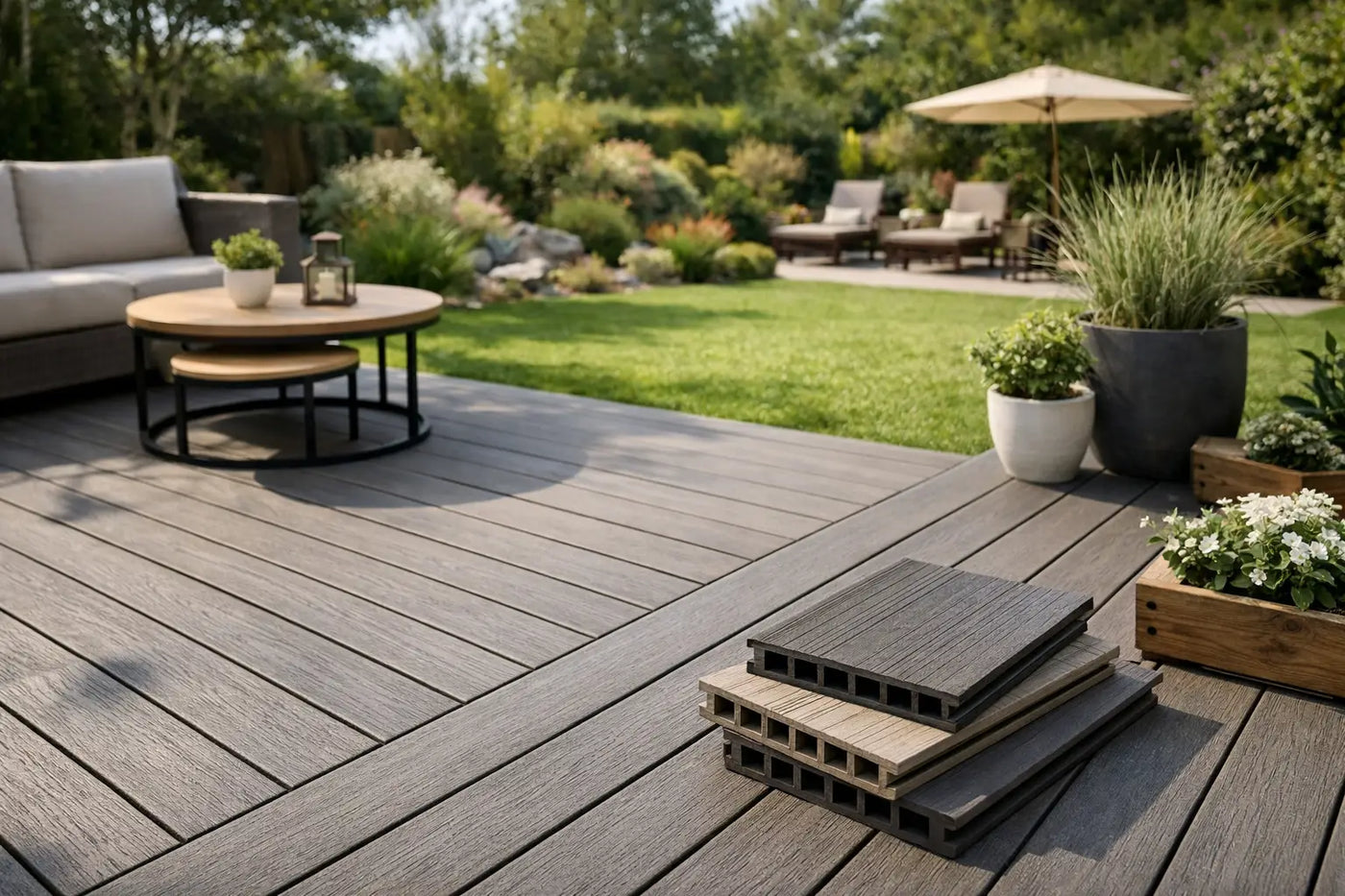
A tired patio, patchy lawn or unused corner can make the whole garden feel smaller than it is. Composite decking gives that space a defined purpose - somewhere for morning coffee, family meals or simply putting your feet up - with a polished wood-look finish that does not demand a yearly sanding and staining routine.
For homeowners who want a premium-looking garden upgrade without turning weekends into maintenance jobs, it is a practical choice. The key is choosing the right boards, planning the base properly and allowing for the small details that make the finished area look considered rather than improvised.
What is composite decking?
Composite decking is made from a blend of recycled wood fibres and plastic. The result is a board designed to capture the warmth and texture of timber while standing up better to moisture, weather and everyday garden life.
Unlike traditional timber, it will not need regular painting, oiling or staining to protect its appearance. A simple clean is usually enough to keep it looking smart. That makes it especially appealing around dining areas, hot tubs, garden offices and busy family spaces where the deck needs to work hard, not become another job on the list.
It is not completely maintenance-free, and no outdoor surface stays pristine without care. Pollen, mud, fallen leaves and food spills should still be cleared promptly. But compared with timber, the upkeep is far lighter and more predictable.
Why composite decking works for modern gardens
The biggest advantage is the balance between visual impact and practicality. A deck can create a level, usable surface over an awkward slope, frame bi-fold doors or make a compact garden feel like an outdoor room. Composite boards give you the clean lines and wood-effect finish that suit contemporary homes, without the splinters, warping and repeated treatment often associated with natural timber.
Colour choice matters here. Dark charcoal and grey boards can create a crisp, architectural look against pale render, black-framed doors or composite fencing. Warmer brown and teak-style shades bring softness to brick homes and planted gardens. Consider the colours already in view from inside the house, as the deck will become part of that everyday outlook.
For a more complete finish, plan the edges at the same time as the main boards. Fascia trims, corner details and neatly finished steps make a noticeable difference. They hide the subframe and turn a practical platform into a space that feels properly designed.
Composite decking versus timber
Timber has genuine character. It can be a lower-cost option at the outset, and some people prefer the variation of natural grain. However, it needs regular protection from the elements. Left untreated, it can fade, crack, splinter or become slippery as algae takes hold.
Composite decking costs more initially in many cases, but its lower maintenance can make the long-term spend easier to manage. You are paying for a surface that keeps its shape and colour more consistently, with less ongoing work. For landlords, busy households and anyone preparing a property for sale, that convenience can be as valuable as the look itself.
There are trade-offs. Composite boards can become warm in direct sunshine, particularly in darker colours. They are also not structural, so they need a correctly built supporting frame beneath them. A high-quality finish depends on the installation just as much as the board you choose.
Choose boards for the way you will use the space
Before selecting a shade, think about how the garden will function. A small balcony-style area outside a kitchen may only need room for two chairs and a table. A larger deck might need zones for dining, lounging and a barbecue, plus clear access through the garden.
Measure carefully and map the layout using tape, string or even cardboard boxes. Leave enough space to pull chairs back, walk around furniture and open doors comfortably. A deck that looks generous on paper can feel cramped once a table and six chairs are in place.
Colour, texture and light
Look at samples outside where possible. Garden light changes throughout the day, and a colour that seems soft grey indoors can appear much darker in full sun. Consider how often the area is shaded too. Heavily shaded gardens may show leaf debris more readily, while sun-soaked spaces can make dark boards feel hotter under bare feet.
A textured or grooved finish can add grip and visual interest, but it may need a little more attention when cleaning. Smoother boards often suit a sleek, modern scheme and can be quicker to sweep. Neither is automatically better - it depends on the style you want and how much debris your garden collects.
Board direction changes the look
Running boards away from the house can make a narrow garden appear longer. Laying them across the width can make the space feel broader. For a more detailed design, use a picture-frame border around the edge, with the main boards laid within it. This takes additional planning and cutting, but gives a strong, high-end result.
Keep the board direction practical as well as attractive. Think about drainage, the location of steps and how people naturally move between the house, lawn and seating areas.
Get the base right before fitting composite decking
The visible boards are only half the project. A stable, well-supported subframe is what prevents movement and keeps the deck looking neat over time.
Your base needs to be level, firm and designed to drain. Depending on the site, this may be a concrete pad, paving, a suitably prepared ground base or an existing sound patio. Avoid building straight over soft, uneven soil and hoping the frame will compensate. It will not.
Use the recommended joist spacing and fixing system for your chosen boards. Composite decking expands and contracts slightly as temperatures change, so the correct gaps between boards, at ends and around fixed structures are essential. Do not squeeze boards tightly together for a cleaner look. Water needs a route away, and the deck needs room to move naturally.
If your deck sits next to the house, keep it below the damp-proof course and make sure rainwater is directed away from the property. For raised decks, complex levels, balconies or areas with structural concerns, seek professional advice before starting. DIY-friendly does not mean skipping the safety-critical parts.
A straightforward fitting approach
With a clear plan, the right tools and free installation guidance, many straightforward deck projects are achievable for confident DIYers. Take your time with the first board. If that line is square and secure, every board that follows becomes easier to fit.
Build and check the frame first, then lay boards in your chosen direction using the compatible clips or fixings. Check your lines regularly rather than waiting until the final row to spot a gradual drift. Cut boards cleanly, keep consistent expansion gaps and finish exposed sides with matching trims or fascia.
It is worth ordering enough material to cover cuts, layout changes and the occasional mistake. Running short near the end of a project can delay the finish and risk a mismatch if stock or batches change. Measure twice, calculate your coverage carefully and add a sensible allowance.
Keep your deck looking its best
A quick sweep every week or two prevents leaves and dirt building up in the gaps. Wash the surface with warm water and a suitable gentle cleaner when needed, using a soft brush to lift grime. Rinse thoroughly afterwards.
Avoid harsh solvents, aggressive pressure washing at close range and metal-edged tools that could mark the surface. If you use a barbecue, place it on a heat-resistant mat and clean any grease splashes promptly. Furniture pads can also help prevent scuffs under chair and table legs.
In autumn, clear wet leaves before they settle and break down. In winter, use a plastic shovel rather than a metal one if snow needs moving. These small habits protect the finish and mean your garden is ready to use the moment the weather improves.
Make the whole garden feel connected
The best deck projects do more than cover a patch of ground. Repeat a colour from your doors, fencing or outdoor panels, add planters to soften the edges and use warm lighting to make the space useful after sunset. Even a modest deck can feel like a genuine extension of the home when the details work together.
Home Hub Direct makes it easier to choose design-led composite decking and the finishing accessories that give a project a clean, confident result. Plan the space around how you want to live in it, not just the area you need to cover - then your garden will feel ready for every spare hour you get to enjoy it.