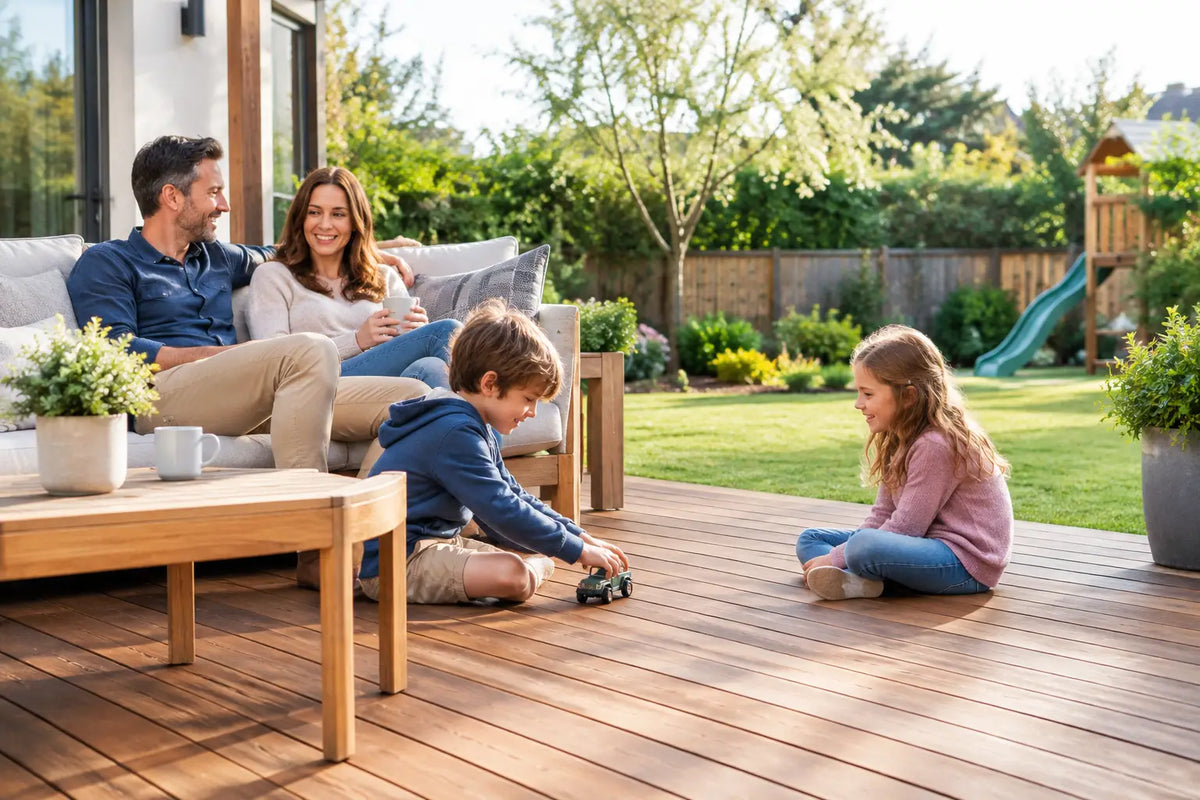
A family garden has to cope with more than sunny lunches. It needs to handle muddy shoes, dropped ice lollies, scooters, garden furniture and the odd energetic football match. The best decking for family gardens is therefore not simply the option that looks good in a sample. It should feel safe underfoot, be easy to live with and make the garden a place everyone can use without adding another demanding maintenance job to your weekend.
Composite decking is often the practical choice for busy households because it brings the warm, contemporary look of timber together with lower upkeep. That said, board finish, colour, layout and the quality of the installation all make a real difference to how well it works for your family.
What Makes Decking Family-Friendly?
Start with the way your household genuinely uses the garden. A calm seating area outside French doors has different needs from a large play space shared by young children, a dog and regular guests. The right deck should create a dependable surface for everyday life, not an area that feels too precious to enjoy.
Grip matters, particularly in the British climate. Rain, morning dew, wet swimming costumes and muddy paws are all part of garden life. Look for decking with a textured, brushed or wood-grain finish designed to give more underfoot traction than a highly polished surface. No outdoor board is completely slip-proof when wet, so sensible drainage and regular clearing of leaves and algae remain essential.
Comfort is just as important. Well-finished boards avoid the splinters, cracks and loose nails associated with ageing timber, which is reassuring when children prefer bare feet in summer. A flush, stable surface also makes it easier to move pushchairs, outdoor toys and dining chairs around the space.
Finally, consider maintenance honestly. If your ideal Sunday is family time rather than sanding and staining, a material that only needs washing with warm soapy water and a soft brush will earn its place quickly.
Best Decking for Family Gardens: Comparing Your Options
Composite decking
For many family homes, composite decking offers the strongest balance of appearance, comfort and low-fuss care. Made from a blend of recycled wood fibres and plastic, it is designed to resist rot, warping and splintering better than traditional timber. It does not need annual staining or sealing, helping the garden stay polished with less effort.
It is also available in a wide choice of colours, from soft greys and contemporary charcoal to warmer oak-inspired tones. This makes it easier to connect the deck with your doors, fencing, outdoor panels or interior style. A grey board can create a clean backdrop for bright planters and children’s toys, while warmer shades help a north-facing garden feel more inviting.
There are trade-offs. Composite boards can cost more upfront than basic softwood, and darker colours may become noticeably warm in direct sunshine. If little ones often play barefoot and your garden gets strong afternoon sun, a mid-tone or lighter shade is usually the more comfortable choice. Always check the manufacturer’s installation guidance too, as composite needs the correct joist spacing and expansion gaps to perform properly through changing temperatures.
Timber decking
Timber has a natural character that suits period homes and relaxed cottage-style gardens. It can be a more affordable starting point, especially for a smaller platform, and it is easy to repaint or restain when you want a new look.
The compromise is maintenance. Timber needs regular protection from moisture and UV exposure, and neglected boards can become rough, slippery or prone to splitting. For a family that enjoys DIY and is happy to maintain the deck each year, quality timber can still be a good option. For households looking for a long-lasting, lower-maintenance surface, composite is normally the simpler route.
Porcelain paving and other hard surfaces
A porcelain patio can be an excellent choice around a dining table or barbecue, particularly where you want a crisp, contemporary finish. It is hard-wearing and easy to clean, but it feels less warm than decking and requires a properly prepared base. It can also be less forgiving when children fall while playing.
Many gardens benefit from combining materials rather than choosing one surface for every area. For example, use composite decking for the main family seating zone, then create a paved barbecue area or a lawn for active play. Breaking up the garden this way gives each area a clearer purpose and can make a modest plot feel larger.
Plan the Layout Before Choosing a Board Colour
The best board in the world will not solve a cramped or awkward layout. Before ordering, place outdoor chairs, a table or even cardboard outlines where you expect them to sit. This reveals how much usable space your family needs, rather than how much space looks impressive when empty.
For a dining area, allow room to pull chairs back without stepping straight onto the lawn. If the deck leads from the house, keep a clear route to the garden and avoid creating a bottleneck at the doors. A small step-down area can define the space beautifully, but keep level changes obvious and consider lighting where the deck will be used after dark.
Board direction changes the feel of the garden. Running boards away from the house can draw the eye towards the far boundary and make a narrow garden appear longer. Running them across the width can make a wide entertaining space feel more grounded. Where possible, position the boards so water can drain freely rather than sit in low spots.
Think about shade too. Decking beside the house may be perfect for breakfast but too hot at tea time. A pergola, parasol or shaded corner can extend the hours the space is comfortable, particularly for babies and young children.
Choose Details That Make Everyday Use Easier
Small finishing choices often have the biggest impact on a family deck. Concealed fixings offer a cleaner surface without visible screw heads, while matching fascia boards hide the subframe and give the project a properly finished edge. Neat edge trims are especially worthwhile where children play close to the perimeter.
If your garden slopes, resist the temptation to compensate with loose packing or a rushed frame. A level, well-supported subframe is fundamental to a solid deck. It protects the boards, reduces movement and stops furniture from wobbling. Use appropriate foundations and follow the recommended support centres for the product you select.
Lighting can improve both atmosphere and safety. Low-level step lights, wall lighting or soft garden lighting make evening meals easier and help everyone see changes in level. Keep cables and electrical work properly planned, particularly around play areas and water.
For homes with dogs, choose a finish that is easy to sweep and wash down. A textured composite surface gives useful grip, but it may hold more dirt than a very smooth board, so regular brushing is still part of sensible garden care.
Keep Your Deck Safe Through Every Season
A family-friendly deck does not need intensive upkeep, but it does need attention. Sweep leaves, soil and food debris away before they trap moisture. Wash the boards periodically, especially after winter, using the cleaning method recommended for your decking. Avoid harsh chemicals or pressure settings that could damage the surface.
Check the perimeter, steps and handrails at the start of each season. Look for loose fixings, movement in the frame and any places where water is not draining away. This is a quick habit that protects the investment and gives you confidence when children are racing in and out of the house.
If you are planning the project yourself, take time to measure twice, order the correct trims and allow for cuts. Home Hub Direct makes it easier to achieve a premium-looking outdoor update with composite decking options and practical installation guidance, so you can focus on a smart result rather than unnecessary complication.
The most successful family deck is the one that gets used without hesitation. Choose a finish you like, build it properly and leave enough open space for the everyday moments that make the garden feel like part of your home.