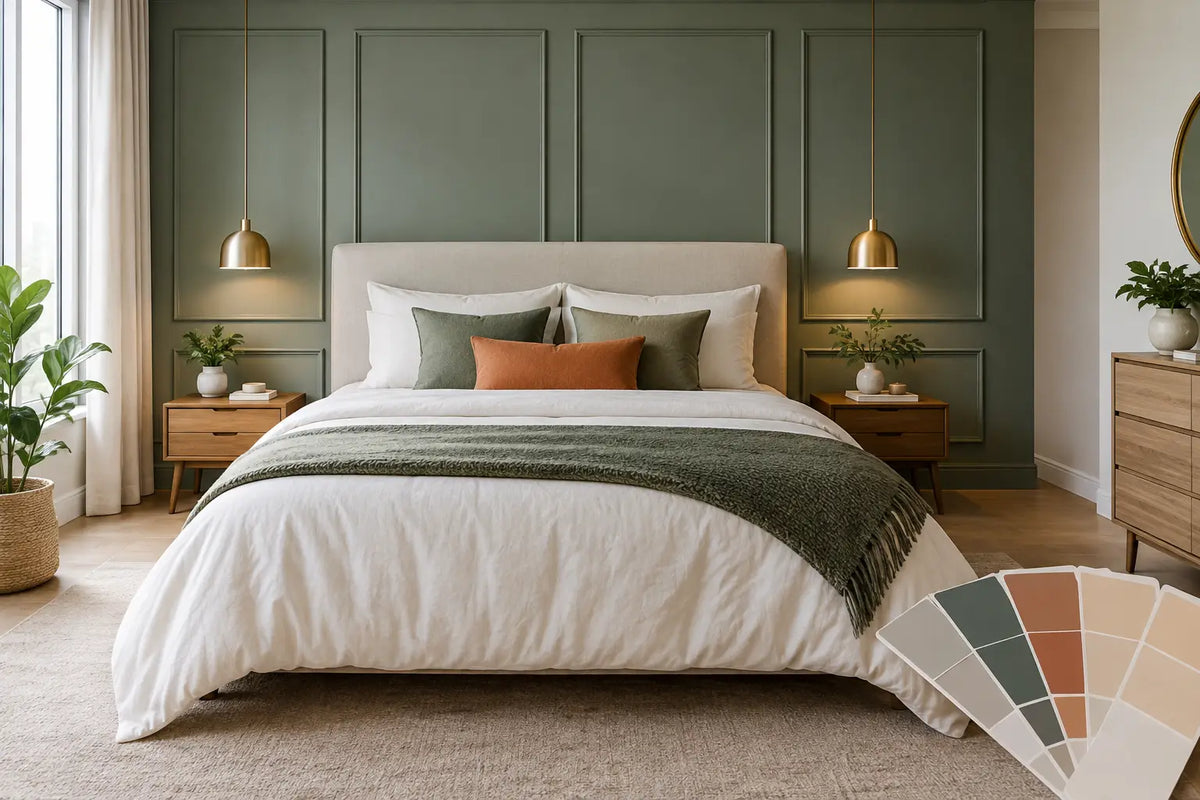
A panelled wall behind the bed can make a standard bedroom feel considered within an afternoon, but the wrong pairing can leave the room darker, colder or busier than you planned. The best bedroom panel colour schemes begin with the light already in the room, then use the bed, flooring and furnishings to make one confident feature rather than a collection of competing finishes.
Acoustic slatted panels are particularly useful here. Their timber-look detail brings depth without the work of building a traditional timber wall, while the dark felt backing creates a crisp shadow line. Choose the surrounding colours carefully and the result feels calm, expensive and easy to live with.
Start with the mood, not a paint chart
Bedrooms ask more of colour than most rooms. You need a scheme that feels restful at night, flattering in soft lamp light and bright enough on a grey morning. Before choosing a panel finish, decide whether you want warmth, contrast or a light, airy backdrop.
A north-facing bedroom generally benefits from warmer notes such as soft stone, mushroom, muted clay, warm white and natural oak. These colours take the edge off cool daylight. In a bright south-facing room, you have more freedom to use deeper finishes, including walnut, charcoal and forest green, without making the space feel enclosed.
Also look at what cannot easily change. Honey-toned carpet, oak furniture and beige curtains suit warm panels better than stark grey. Grey laminate, black metal furniture and crisp white bedding can carry cooler shades and stronger contrast. Panels should connect these fixed elements, not fight them.
Best bedroom panel colour schemes for every style
Natural oak, warm white and oatmeal
This is the reliable choice for a bedroom that needs instant warmth without a heavy feature wall. Use natural oak slatted panels behind the bed, then paint the remaining walls a warm white rather than a blue-based brilliant white. Add oatmeal bedding, linen-textured cushions and a cream or biscuit rug to keep the look soft.
The strength of this scheme is flexibility. It works with light oak furniture, woven lampshades and both brass and black bedside lights. It is also a sensible option for smaller bedrooms because the panel grain adds interest while the pale walls continue to reflect light.
Avoid pairing natural oak with icy white paint or silver-grey accessories in large amounts. The contrast can make the wood look orange. If you prefer a fresher finish, choose chalky off-white and pale sage details instead.
Walnut, mushroom and deep olive
For a more cocooning finish, combine rich walnut-effect panels with mushroom-coloured walls and deep olive bedding or curtains. The mushroom tone acts as a quiet bridge between the brown timber and green textiles, so the room feels layered rather than themed.
This scheme suits larger bedrooms, period properties and rooms with plenty of natural light. It can also make a simple divan bed look more substantial when the panelled wall frames it. Keep the ceiling and skirting light to stop the darker panel from visually lowering the room.
Because walnut is naturally bold, use olive as an accent rather than covering every surface. A duvet cover, a throw or a pair of curtains is usually enough. Add aged brass, bronze or matt black lighting for a finished look.
Smoked oak, soft grey and black accents
Smoked oak panels offer a contemporary route to a darker bedroom without the flatness of a fully black wall. Pair them with a soft, warm grey on the side walls and restrained black details such as picture frames, handles and bedside lights.
This works especially well in newer homes where you want a clean, hotel-inspired feel. Choose grey with a slight taupe or beige undertone. A blue-grey can make smoked oak look colder, particularly under cool LED bulbs.
Bring in texture so the scheme does not become too sharp. White cotton bedding, a taupe upholstered headboard and a thick neutral throw will soften the darker materials. If the bedroom is compact, panel only the wall behind the bed and keep the two adjoining walls light.
Black panels, plaster white and caramel
Black slatted panels can look striking, but they need breathing room. Place them on one wall only and surround them with a soft plaster white, not a clinical brilliant white. Caramel, tan or cognac accessories then add warmth through a leather-look bench, cushions or a throw.
The black felt between the slats gives this scheme real depth, making it ideal for a media-wall-style headboard layout or a room with minimal furniture. It also hides small shadows and imperfections better than pale finishes.
There is a trade-off: black absorbs light. In a poorly lit bedroom, fit warm white bedside lamps on both sides of the bed and consider a pendant or wall lights that wash light across the panels. Warm bulbs around 2700K will make the caramel tones feel richer and keep the room inviting.
Light oak, muted sage and putty
If you want colour but still want the bedroom to feel calm, sage is a strong partner for light oak. Paint the walls in muted sage, choose putty or natural linen bedding, and use light oak panels as the warm focal point. The result has a gentle, garden-inspired quality without becoming overly rustic.
This combination works well for family homes, guest bedrooms and rental upgrades where you want broad appeal. Sage is forgiving with both cream and grey textiles, so changing the look seasonally is straightforward. Keep the green dusty and muted. Bright botanical green will compete with the panel grain.
For a more tailored finish, use slim black bedside lights or matt nickel hardware. These small dark touches define the scheme without taking attention away from the panels.
Greige panels, clay and soft cream
Greige timber finishes are useful when your bedroom already has grey flooring but you want more warmth than a monochrome scheme can offer. Pair them with soft cream walls and a clay, terracotta or muted rust accent through bedding and artwork.
This is a balanced, modern option for rooms that receive uneven light. The cream prevents the grey from feeling stark, while clay brings enough warmth to make the room feel personal. Choose a faded clay rather than a bright orange-red, especially if the panel finish has cool undertones.
A pale boucle chair, woven basket and natural wood side table complete the look without adding another strong colour. Let the panel texture do the detailed work.
Match panel placement to the room
A full-width panelled wall is usually the easiest way to make the bed wall feel deliberate. Run the panels from floor to ceiling where possible, then centre the bed against them. This creates height and removes the need for lots of wall art.
If you are working with a narrow bedroom, panel a centred section that extends beyond each bedside table rather than covering every wall. Paint the rest in a matching or slightly lighter shade. It keeps the feature focused and can make the sleeping area feel more generous.
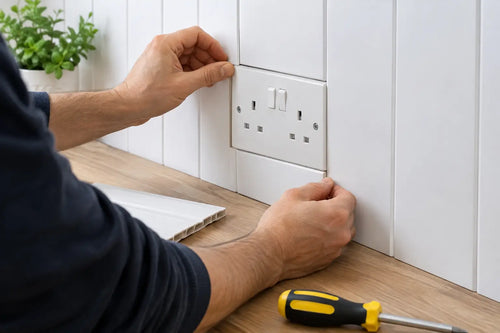
For rooms with a chimney breast or an awkward recess, use panels to turn the complication into a focal point. Cover the chimney breast only, or line the back of a recess to create a headboard zone. Measure around sockets, switches and radiators before ordering, and plan trims so exposed edges look intentional.
Let lighting decide the final shade
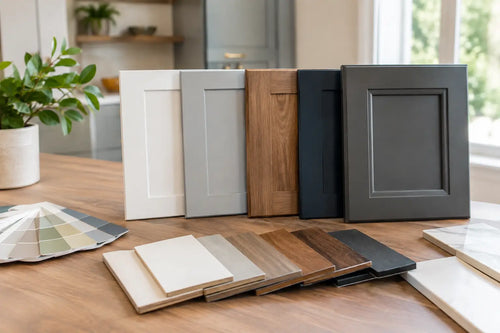
Paint swatches and panel samples can change dramatically between daylight and evening. View them next to each other on the intended wall for a full day before committing. What looks like a calm taupe at midday can turn purple or green once the lamps are on.
Warm white lighting is usually the safer choice for timber-look bedroom panels. It draws out oak, walnut and caramel tones, and makes whites look softer. Cool white bulbs may suit a very crisp black-and-grey scheme, but they can make a bedroom feel less restful.
Layer the lighting too. A central ceiling light is practical, yet bedside lamps or wall lights are what reveal the depth of slatted panels. Aim light across the face of the wall, not straight down from above, for more visible texture.
Keep the finishing details restrained
Once the panel colour, wall shade and bedding are working together, resist adding several more statement finishes. One timber tone, one main wall colour and one accent colour is often enough. If you introduce gold, black, chrome, patterned wallpaper and multiple woods at the same time, the feature wall loses its impact.
Choose matching trims and a neat edge treatment, especially around the outside of a panel run. Small details separate a quick update from a polished result. Home Hub Direct panels are designed for DIY-friendly fitting, and following the supplied installation guide helps you plan cuts, adhesives and finishing pieces before the first panel goes up.
The most successful bedroom panel scheme is the one that still feels good when the cushions are not perfectly arranged and the morning light is less than flattering. Start with the warmth and depth your room needs, then let the panels provide the character. A considered wall behind the bed can do more for the whole room than a complete redecoration.