
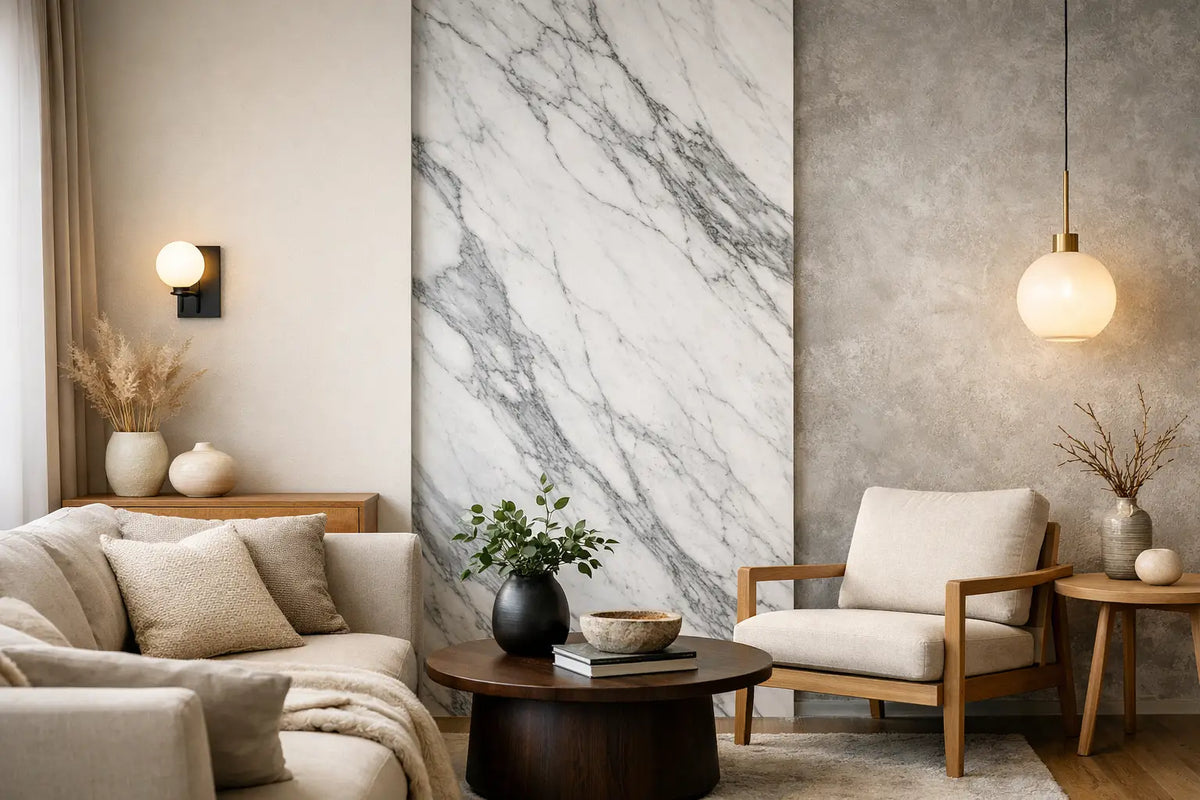
A rental can feel finished without becoming a costly restoration job on moving day. The best wall finishes for rentals add warmth, texture or personality while respecting the tenancy agreement, the wall beneath and your budget. The right choice is rarely the most dramatic one. It is the finish that looks considered, suits the room and can be removed, repainted or retained with clear landlord approval.
Before ordering samples or opening a paint tin, read your tenancy agreement. Many landlords are happy for tenants to decorate in neutral colours or make sensible improvements if asked first. Get permission in writing, especially where an installation uses adhesive, screws or fixings. A quick message now is far easier than negotiating a deposit deduction later.
Start with the finish your rental can handle
Walls in rented homes vary wildly. A smooth, recently plastered living-room wall offers more options than a damp-prone exterior wall, flaky old paintwork or a textured hallway. Consider how long you expect to stay, how much wear the space gets and whether you are expected to return the property to its original condition.
A short tenancy usually calls for low-commitment finishes. If you plan to stay for several years, a landlord-approved paint scheme or properly fitted feature wall may offer better value and a more polished result. Photograph the room before you begin, including existing marks, and keep receipts, colour names and spare materials together.
1. Washable matt paint for a clean, flexible reset
Paint remains one of the most effective rental upgrades. It can make a tired room feel lighter, calmer and more intentional in a single weekend, particularly when the existing colour is magnolia, scuffed white or a shade that fights every piece of furniture you own.
For rental homes, choose a durable, washable matt or soft-sheen finish rather than a very flat contract paint. Washable formulations cope better with fingerprints in hallways, muddy paw marks and the everyday knocks of family life. They are also easier to clean without leaving shiny patches behind.
Soft warm whites, muted greiges, gentle sage and dusty blue-grey tones tend to work well across changing light conditions. If the tenancy requires you to repaint on departure, avoid a colour that will need several coats of white to cover it. Keep a labelled sample pot for touch-ups, and confirm whether ceilings, woodwork and radiators are included in your permission.
The trade-off is time. Preparation matters more than the paint itself: fill minor holes, sand carefully and use dust sheets. Paint is affordable, but a poor finish can be difficult to reverse quickly when your moving date arrives.
2. Peel-and-stick wallpaper for pattern without permanence
Removable wallpaper is a strong option when a room needs personality rather than another neutral coat of paint. It works particularly well behind a bed, on one dining-area wall or in a small downstairs loo where a confident print can do more than expensive accessories.
Choose a design with enough scale for the wall. Tiny, busy patterns can make a compact room feel cluttered, while a restrained botanical, linen-look texture or geometric print brings depth without taking over. Order a sample first. Colours on a screen can look completely different beside your flooring, curtains and natural light.
Its removable label does not make peel-and-stick wallpaper risk-free. It adheres best to clean, smooth, fully cured painted walls. On weak paint, fresh plaster, damp walls or heavily textured surfaces, removal can lift the finish beneath. Test a discreet patch and check the manufacturer’s instructions before committing to a full wall.
3. Fabric panels and wall hangings for zero-drill softness
Not every finish has to cover the wall itself. A large textile wall hanging, quilt, framed fabric panel or tension-mounted curtain track can change the feel of a bare room with little intervention. This approach is especially useful where the landlord will not allow paint or adhesive finishes.
Textiles add softness that paint cannot provide. They can also reduce the echo of a sparsely furnished bedroom or lounge, although they should not be mistaken for a complete soundproofing solution. Choose a piece large enough to look deliberate, then repeat one or two colours from it in cushions, bedding or a rug.
Command-style strips and removable hooks can help, but always follow their weight limits and surface guidance. For heavier pieces, ask for permission to use existing picture hooks or small fixings rather than risking a sudden fall and damaged plaster.
4. Self-adhesive wall tiles for practical splash zones
Self-adhesive tiles can give a rented kitchen or utility area a more finished look when fitted over a suitable existing surface. They are best treated as a decorative update, not a remedy for loose tiles, water damage or mould. Fix the underlying issue through the landlord before covering anything.
Look for wipe-clean, moisture-resistant options intended for splashback use. A pale stone effect can brighten a dark kitchen, while a simple metro style brings a classic look without the labour of grouting. Keep the design calm if cabinets or worktops already have a strong pattern.
Heat, steam and grease all test an adhesive. Check clearance requirements around hobs and avoid applying tiles to unstable paint or crumbling grout. Removal may still need gentle heat and patient cleaning, so obtain written consent before fitting them in a kitchen or bathroom.
5. Landlord-approved acoustic slatted feature panels
Slatted wall panels create the kind of focal point that makes a bedroom, lounge or media-wall area feel instantly more designed. The vertical lines add height, the wood-look finish adds warmth and the effect can be far more substantial than paint alone. This is a good choice for longer lets, furnished rentals that need a style lift or landlords upgrading a property between tenancies.
However, acoustic slatted panels are not automatically a removable rental finish. Many installations use adhesive, mechanical fixings or both, and taking them down can affect the wall surface. Treat them as a proper improvement project: discuss the proposed location, finish and fitting method with the landlord first, then agree in writing whether the panels will remain when you leave.
If approval is granted, choose one focused wall rather than panel-cladding every surface. Behind a television, bed or dining table is usually enough. Home Hub Direct supplies DIY-friendly wall panels and installation guidance, helping approved feature-wall projects achieve a premium look without turning the room into a building site.
6. Oversized art and gallery-style picture ledges
For renters who want the freedom to change their minds, art is one of the smartest wall finishes available. One oversized print can give a plain wall colour, scale and a clear focal point. A collection of coordinated frames can do the same, provided there is enough spacing for the arrangement to breathe.
Use removable strips only where the wall finish and artwork weight allow. Alternatively, lean larger frames on a console, chest of drawers or picture ledge already supplied with the property. This avoids unnecessary holes and looks relaxed rather than temporary.
The key is proportion. A small print floating above a large sofa often makes the whole room feel unfinished. Aim for artwork that spans roughly two-thirds of the furniture below it, or build a grouped arrangement with a similar overall width.
How to choose between the best wall finishes for rentals
Think about your exit plan before your inspiration board. Paint is ideal when you have permission and are happy to restore the colour later. Removable wallpaper gives you pattern, but only on sound, smooth walls. Textiles and art offer the lowest-risk transformation. Panels deliver the biggest design statement, but they work best with a landlord who sees their lasting value.
Also consider the room’s job. Hallways need scrubbable surfaces. Bedrooms benefit from warm, calming texture. Kitchens need materials that can be wiped down and safely used around moisture and heat. In a north-facing room, lighter finishes with warm undertones prevent the space feeling cold; in a sunny room, deeper colours or timber tones can create a more grounded feel.
Avoid spending heavily on an installation that will not travel with you unless it improves your daily life enough to justify it. A great rental upgrade should make the home feel like yours now, while leaving you confident about what happens when it is time to hand back the keys.
Choose one wall, one finish and one clear purpose. A carefully painted bedroom wall, a removable patterned nook or a landlord-approved slatted feature can make a rental feel genuinely personal without making moving out harder than it needs to be.


