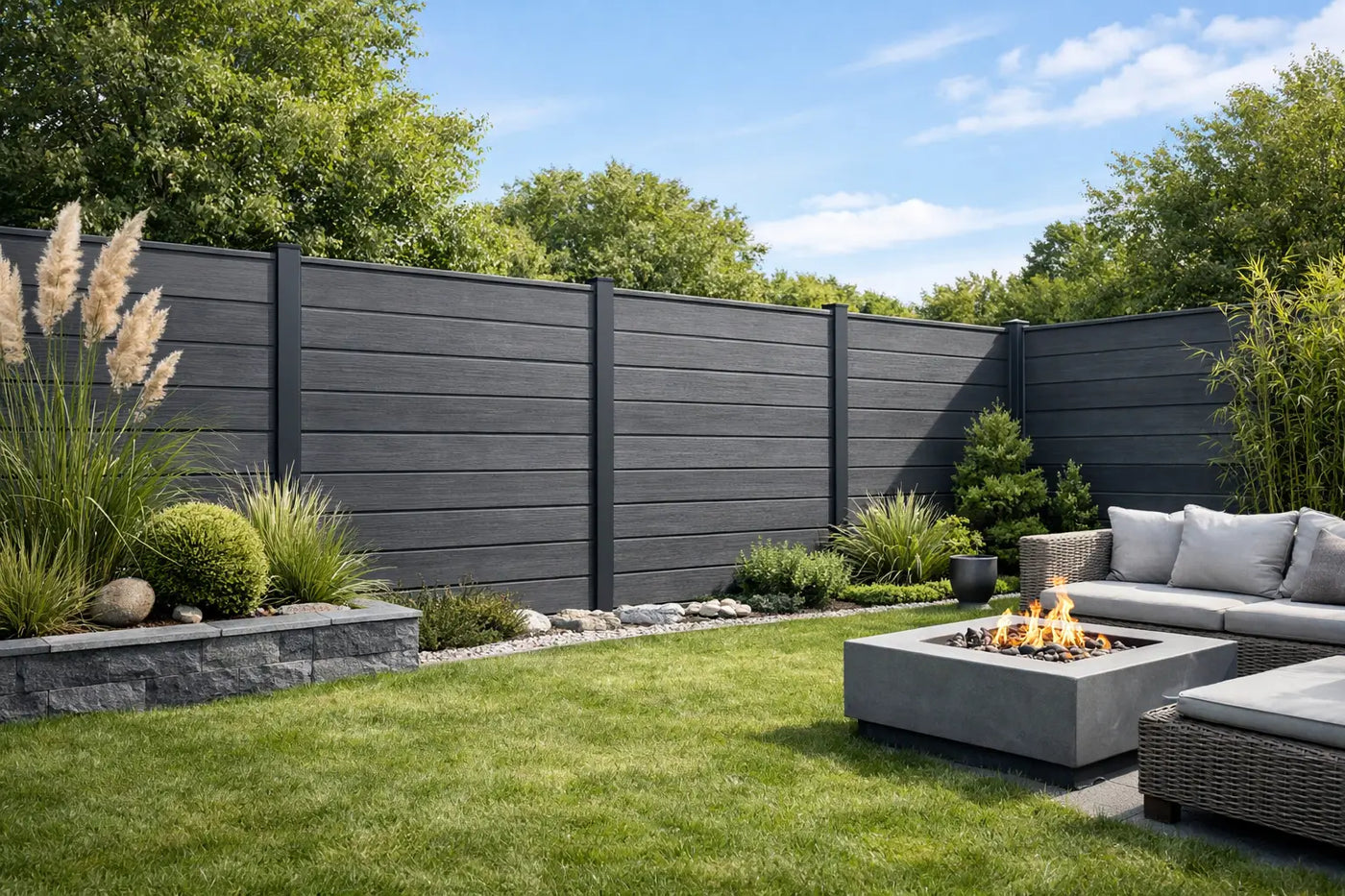
A tired fence can make an otherwise well-kept garden feel unfinished. Peeling paint, warped boards and visible gaps quickly take the edge off a new patio, decking area or outdoor seating space. Composite fencing panels offer a clean, contemporary way to create privacy and define your garden without signing up for the regular sanding, staining and repainting that timber often demands.
For homeowners planning a practical garden upgrade, the appeal is simple: a premium wood-look finish, strong everyday performance and a boundary that stays smart with far less effort. The right panel choice can turn a neglected edge of the garden into a polished backdrop for planting, entertaining or simply relaxing outdoors.
Why choose composite fencing panels?
Composite fencing is made from a blend of recycled wood fibres and plastic. This gives it the warmth and texture people like about timber, while reducing the issues associated with prolonged exposure to rain, frost and strong sunshine.
Unlike traditional wooden boards, composite panels are not designed to need yearly painting or staining. They are resistant to rot, splintering and insect damage, making them particularly useful for busy family gardens, rental properties and renovation projects where low maintenance matters. A simple clean with warm, soapy water is usually enough to keep the surface looking fresh.
The appearance is another major benefit. Horizontal composite boards create neat, consistent lines that suit modern garden schemes, especially when paired with composite decking, porcelain paving, black furniture or outdoor wall panels. Choose a natural wood-effect shade for warmth, or a darker tone for a crisp, architectural look.
That said, composite is not identical to wood, and that is often the point. Its colour and grain are more uniform than natural timber, which creates a more refined finish but may not suit every period property or cottage-style garden. If you want knots, variation and the option to repaint in a new colour every few years, timber may still be the better fit.
Planning your composite fencing panels project
A successful fence starts with accurate measuring. Measure the full run of the boundary, then check the height you need for privacy, screening and the overall look of the space. Do not assume an existing fence line is level. Gardens often slope, and even a small fall can affect how panels need to be fitted.
Think about what the fence will sit alongside. A low boundary may be enough to separate a patio from a neighbouring garden, while a taller screen can make a seating area feel more private. If your garden is overlooked, consider the sightlines from upstairs windows as well as ground level. The aim is to improve privacy without making the space feel closed in.
You should also check your property boundaries and any local restrictions before starting. In England and Wales, fences are generally subject to height limits, particularly when positioned next to a highway. Homes in conservation areas, listed properties and developments with management rules may have additional conditions. A quick check before ordering avoids an expensive alteration later.
Choose the right posts and frame
Composite boards need a suitable supporting system. In many installations, boards slide into grooved posts, with a bottom rail and top cap creating a secure, finished frame. Posts can be aluminium for a sleek modern style or designed to work with existing concrete fence posts using adaptor systems.
Using the correct compatible parts matters. Mixing boards, posts and trims from different systems can lead to loose fitting, uneven expansion gaps or an untidy finish. Plan for every component from the beginning, including post caps, rails, cover strips and fixings. This is where a fence moves from looking like a DIY job to looking properly considered.
If you are replacing damaged timber panels but your concrete posts are still sound, an insert-style composite system can be a sensible route. It can reduce the amount of demolition required and retain the established boundary line. However, check both the groove width and post condition carefully. Cracked, leaning or unstable concrete posts should be addressed before fitting new panels.
Account for movement and drainage
Composite materials can expand and contract slightly as temperatures change. Follow the manufacturer’s guidance on spacing and do not force boards tightly together. The system is designed to accommodate normal movement, but only if it is installed with the recommended clearances.
Drainage matters too. Keep boards clear of standing water and avoid burying them directly into soil or gravel. Water should be able to run away from the base of the fence. This protects the frame, helps keep the finish cleaner and supports a longer-lasting installation.
How to match your fence to your garden
Composite fencing works best when it feels like part of the wider garden rather than a separate addition. Start with your existing surfaces. Grey fencing can complement pale paving and contemporary black-framed doors, while brown and natural shades work well beside warmer brickwork, timber furniture and leafy planting.
For smaller gardens, a lighter finish can stop the boundary feeling too heavy. Run boards horizontally to draw the eye across the width of the space, which can make a narrow plot feel broader. In a large or exposed garden, darker boards can provide a stronger backdrop and make colourful plants, outdoor lighting and statement furniture stand out.
A full-height fence is not always necessary. You can use composite panels to create a feature screen around a dining area, hide bins or storage, separate a work-from-home garden room zone, or conceal an unattractive side passage. These smaller projects can make a real visual difference without requiring a complete boundary replacement.
Is DIY fitting realistic?
For a straightforward, level boundary, composite fencing can be a manageable DIY project for someone comfortable measuring, drilling and working carefully. The modular nature of board-and-post systems makes the process more approachable than building a fence from individual timber boards.
The preparation is the part worth taking seriously. Posts must be correctly positioned, plumb and securely fixed before the boards are installed. If the posts are out of line, every panel above them will show it. Use a string line, spirit level and repeated measurements rather than relying on one quick check.
Professional help may be worthwhile where the ground slopes sharply, old posts need removing, the fence is very long, or the boundary is difficult to access. It is also sensible to call in a professional if you are unsure where underground services run. A clean installation depends on a stable foundation, not just attractive boards.
Home Hub Direct is built around making design-led upgrades feel achievable, with clear product choices and fitting guidance to help you plan before the first post is set. Ordering the full compatible system together also makes it easier to achieve a consistent finish.
Looking after a composite fence
One of the biggest advantages of composite fencing is that maintenance stays simple. Sweep away leaves and soil that collect around the base, especially in autumn and winter. Wash the boards occasionally with warm water, a mild detergent and a soft brush or cloth. Rinse thoroughly afterwards.
Avoid harsh solvents, abrasive pads and aggressive pressure washing at close range, as these can mark the surface. For isolated spills from food, soil or garden products, clean them sooner rather than later. A little routine care keeps the fence looking its best and prevents dirt from building up in textured grain finishes.
Some natural weathering can occur over time, particularly in the first months after installation, and the exact effect depends on colour, exposure and product finish. This is normal rather than a sign of failure. What composite avoids is the familiar timber cycle of flaking paint, soft rot and annual treatment days.
The cost question: value beyond the first purchase
Composite fencing can cost more upfront than basic timber panels. That difference is real, so it is worth comparing like for like rather than focusing only on the initial panel price. Include the likely cost of timber preservative, paint or stain, replacement boards, fixings and the time needed to maintain a wooden fence over the years.
For a long-term home, a busy household or a property being improved for letting, low-maintenance materials can offer better value through reduced upkeep and a consistently smart appearance. For a short-term solution on a tight budget, standard timber may be more suitable. Your best choice depends on how long you expect the fence to stay in place and how much maintenance you are genuinely prepared to do.
A well-planned composite fence gives the garden a finished edge that holds its own through wet winters, busy summers and everything in between. Measure carefully, choose a finish that belongs with your space and give the installation the solid start it deserves. The result is not just a new boundary, but a garden that feels ready to enjoy.